

When Christians begin thinking about investing, it’s common to wonder:
“Is investing Biblical?”
Some assume investing is simply another form of gambling. Others believe Christians should avoid financial markets altogether. Still others view investing as the key to financial freedom.
Rather than asking, “Does the Bible approve of stocks?” A better question is: How does God want us to steward the resources He’s entrusted to us?
Investing Is a Stewardship Question
In our previous blog post, Faith & Stewardship: What Biblical Stewardship Really Means for Modern Finances, we explored one of the Bible’s foundational financial principles: everything we have belongs to God.
Once we understand that, the next question naturally follows: How should we steward those resources wisely? One important way we can do that is by investing them productively.
Scripture has a great deal to say about wisdom, planning, productive ownership, diligence, and using our resources faithfully. Those principles can help shape the way we think about investing today.
The question is, “How can I use the resources God has entrusted to me in a way that honors Him?”
The Proverbs 31 Woman Was an Investor
One of the clearest examples of wise financial stewardship appears in Proverbs 31.
Many people know the Proverbs 31 woman for her diligence and character. But they often overlook her financial wisdom.
“She considereth a field, and buyeth it: with the fruit of her hands she planteth a vineyard.”
—Proverbs 31:16 (KJV)
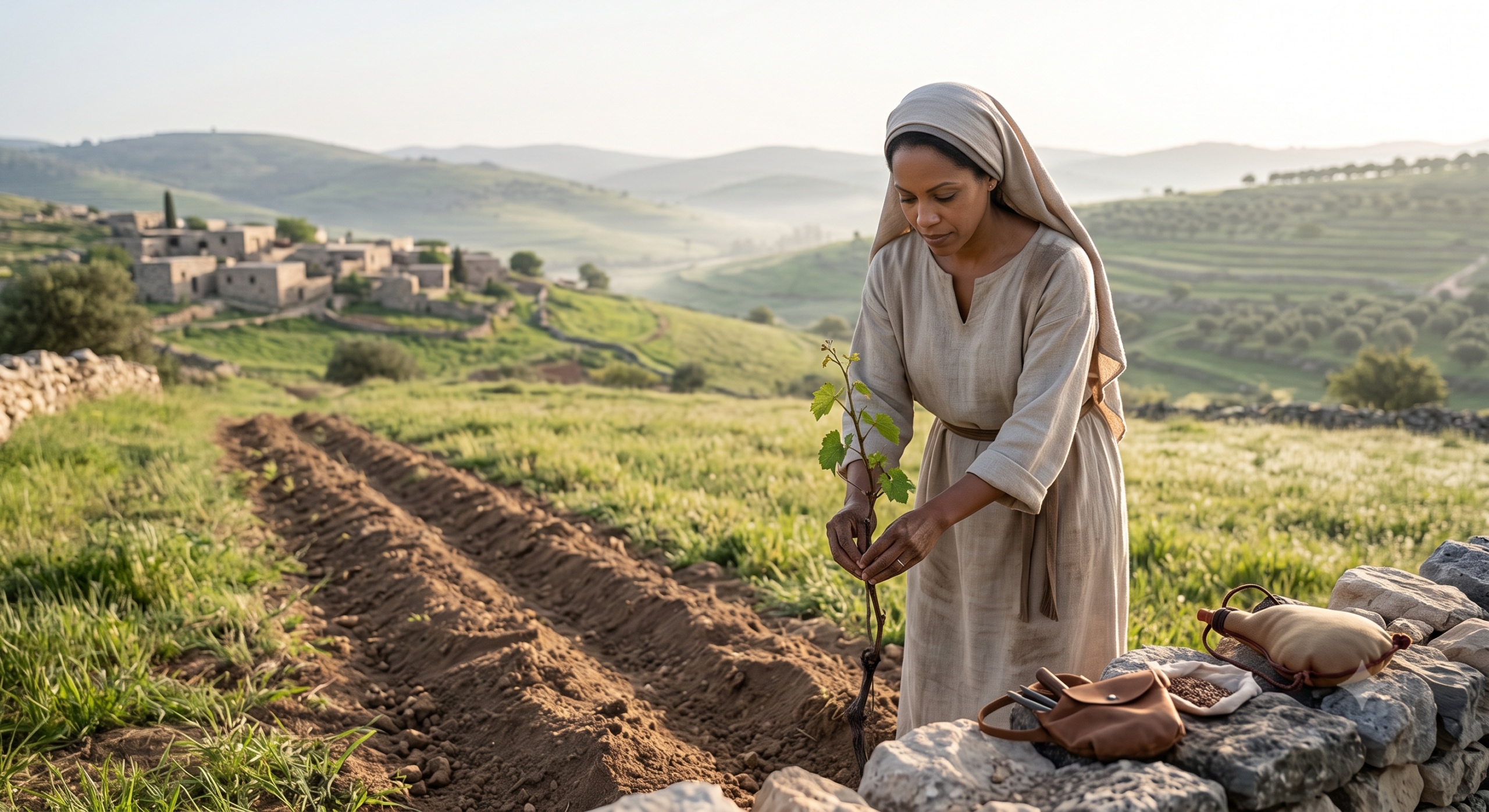
Notice what she does.
She considers a field.
She evaluates it before purchasing it.
Then she buys it.
Finally, she develops it into something productive by planting a vineyard.
This isn’t impulsive spending.
It’s thoughtful investing.
She uses the fruit of previous work to acquire an asset capable of producing future value.
The passage doesn’t glorify wealth—it praises wisdom, diligence, foresight, and productive stewardship.
Whether you’re purchasing a rental property, investing in a business, or owning shares of quality companies through the stock market, the principle remains the same:
Wise stewardship involves carefully evaluating opportunities before committing resources.
That’s exactly why we created our Unlock the Stock Market Challenge. Rather than encouraging people to jump into the market based on emotions or headlines, we teach the foundational skills every investor needs to evaluate stocks with greater confidence.
Our goal is to help Christians replace fear and guesswork with knowledge, wisdom, and Biblical stewardship.

Jesus Expected Resources to Be Put to Work
One of Jesus’ best-known parables also illustrates this principle.
In the Parable of the Talents (Matthew 25:14–30), a master entrusts resources to three servants before leaving on a journey.
Two servants wisely put those resources to work and produce a return.
One buries his talent in the ground out of fear.
When the master returns, he commends the faithful servants for using what had been entrusted to them, and reprimands the slothful servant who buried the talent.
The lesson isn’t that every investment succeeds.
Nor is Jesus teaching a formula for financial returns.
The deeper principle is this:
Faithful stewardship involves wisely using what God has entrusted to us—not allowing fear to prevent us from taking responsible action.
God calls His people to be faithful managers, not passive owners.
Wisdom Comes Before Action
“The plans of the diligent lead surely to plenteousness; but of every one that is hasty only to want.”
—Proverbs 21:5 (KJV)
The Bible warns against impulsive decisions.
Wise investing requires learning, research, patience, and planning.
This is one reason we believe a stock trading education matters so much. Successful trading and investing isn’t built on hot tips or emotional reactions. It’s built on knowledge, discipline, and repeatable processes.
Diversification Is a Biblical Principle
The Bible even encourages spreading risk rather than concentrating it.
“Give a portion to seven, and also to eight; for thou knowest not what evil shall be upon the earth.”
—Ecclesiastes 11:2 (KJV)
We cannot predict the future. And because uncertainty exists, wisdom often involves avoiding an unnecessary concentration of risk.
Many investors today use this principle by diversifying their investments.
Rather than placing everything into one opportunity, they spread risk across multiple investments. The same principle applies to trading by carefully managing how much of your portfolio is committed to any single trade.
Wealth Is Not the True Goal
The Bible speaks positively about wise stewardship. It does not encourage the pursuit of wealth as life’s highest objective.
Paul writes:
“For the love of money is the root of all evil…”
—1 Timothy 6:10 (KJV)
Notice the distinction. Money itself is not condemned. The love of money is. In fact, the Word of God speaks about money and how to wisely steward it more than most concepts found in the entirety of the Bible–much time is spent on it.
For Christians, investing, trading, or pursuing wealth should never become an idol.
Instead, the skillset of trading and investing should become one tool among many that helps provide for our families, support ministries, give generously, and leave a legacy for future generations.

Work Still Comes First
The Bible consistently connects wealth with productive work.
As our friend Dr. Myron Golden likes to say, “Work works.” Scripture encourages diligence, skill, and faithful labor. Over time, investing allows the fruit of that labor to continue working on your behalf.
By investing and trading in the stock market, we put some of today’s resources to work for tomorrow’s responsibilities.
A Biblical View of Investing
So, what does the Bible actually say about investing?
It doesn’t tell us which stocks to buy. But it does encourage principles that wise investors can apply today:
- Remember that God owns everything
- Steward resources faithfully
- Make thoughtful decisions rather than emotional ones
- Work diligently
- Diversify wisely
- Give generously
Investing, when approached with humility, wisdom, and Biblical stewardship, can be one practical way of managing God’s resources faithfully.
At TRADEway, we believe trading and investing are skills that should be grounded in wisdom, discipline, and stewardship—not speculation or fear.
When we remember whose money it really is, investing becomes less about building our own kingdom and more about faithfully stewarding God’s resources for His purposes.