
Within the whole of the last 2000 years, it’s a novel circumstance to find God’s people wielding the civic power to change the course of the world’s greatest nation.
To contemplate the concept of a Christian having a meaningful vote in shaping the politics around him is something that would have seemed alien to our forefathers of the faith. The vote, in the hand of a righteous man or woman of God, is like a weapon that can be used in the war for the culture around us. And yet, though we (as Christians) find ourselves in such a circumstance now, we are ill-equipped to think Biblically about political science, the duty of Christian influence in politics, or how we should distinguish things like Christian religion versus political strategy.
We take for granted the power we have to curb the evils that government can promote, and have a tendency to relinquish that weapon—the vote—that we’ve been Providentially handed at this point in history, a weapon that our Christian ancestors from the murderous Roman Empire of the 1st and 2nd Centuries, to the tyrannical reign of King George III could have only dreamed of having.
We relinquish it, often, because of our disillusionment with the candidates we have to choose from. Perhaps there is merit in being disillusioned at times; it’s righteous to feel a sense of dread when sin has so permeated our government and its politicians (on every side). Elijah certainly felt disillusioned in his day, when Ahab reigned, and his successors were no better.
But this is why thinking in categories is so important for Christians to do at this hour.
We cannot allow our (perhaps justifiable) frustration with the moral decay of our nation (and maybe even our candidates) to motivate the discarding of our vote. Because a vote today—even for a candidate whose personal life is in need of the cleansing Gospel—may very well present a moral candidate for our children’s children.
Perhaps our Jehu can pave the way for our children’s Asa, who can pave the way for their children’s Josiah. But we have to think generationally to stay motivated; if our motivation is based upon the “perfect candidate,” then we will not only lose, but we will set our posterity up for battles far worse than the ones we face today.
When I say we must think in categories, what I mean is that we must distinguish between our duty as Christians in the sacred sense—personal righteousness, church involvement, ministerial endeavors, and bringing God’s Word to bear in our own lives—and our duty as Christians living in a fallen world, and given strategic open-doors by God’s Sovereignty to make a simple choice. Not to sit anything out, but actually make a choice, and cast a vote.
Now, it’s at this point that many Christians have a problem. In their minds, they can’t possibly vote for someone whose personal life is so disagreeable with the statutes of Scripture—even if it’s the best option we have to thwart the victory of political platforms they believe conflict with Biblical teaching.
But I believe that the reason so many Christians find it difficult to vote for someone with a poor personal testimony—but a good platform—is because we’ve bought into a secular premise that elevates Democracy (all rise) to the status of a religion.
In other words, if I vote for Candidate A, then I must affirm that person, and everything about that person, not simply the platform. It’s not enough to say “I think Candidate A is better in this moment than Candidate B” anymore; when we vote, that candidate is now part of our identity in the minds of the secularists, and those who carry secularist presuppositions (sometimes unknowingly).
But this is not the case.
We aren’t saying that we trust Candidate A to be a perfect person, or that he’s even a Christian; if that were the point of being in the political game, then Joseph, Daniel, Esther, Zerubbabel, and Isaiah would have been in big trouble for their actions.
But instead, they simply worked with what God had Providentially put before them—and they were treated as people with integrity because of it.
That can be you this election season, as we face significant questions about national political reform and morality.
As we near the midterm elections, which will decide and fill some of the most significant political positions in our country, Christians face questions about how to weigh candidates’ personal character against their platforms on issues such as abortion, sexuality, marriage, and religious liberty.
Remember, your vote for someone now who may not be perfect, but whose platform you believe advances important principles, may influence the choices available to your grandchildren someday.

Biblical Principles for Considering Political Leadership
As you consider the choices before you this election season, here are some Biblical principles to reflect on:
- Leadership, oppression, and unjust gain: “The prince that wanteth understanding is also a great oppressor: but he that hateth covetousness shall prolong his days.” (Proverbs 28:16, KJV)
- God often uses imperfect rulers to accomplish His purposes: “Thus saith Cyrus king of Persia, All the kingdoms of the earth hath the LORD God of heaven given me; and he hath charged me to build him an house in Jerusalem, which is in Judah. Who is there among you of all his people? The LORD his God be with him, and let him go up.” (2 Chronicles 36:23, KJV)
- We are commanded to pray for our politicians, in order that we live “quiet and peaceable lives” (1 Timothy 2:2). This is an important consideration when evaluating the policies and priorities of those seeking public office.
- Personal righteousness and political leadership: “Cast me not away from thy presence; and take not thy holy spirit from me.” (King David in Psalm 51:11, KJV, after committing great personal sin)
- Even leaders who accomplish good can fall short in important places: “But the high places were not removed: nevertheless Asa’s heart was perfect with the LORD all his days.” (1 Kings 15:14, KJV)
- While it is good and proper to affirm the separation between church and state (as they are Biblically distinct), we should consider the relationship between morality and state (see Deuteronomy 17:18–19; Psalm 94:20–21). Christians may look to these passages when thinking through the moral responsibilities of those in authority.
If you are a Christian, and one who desires to see a bright future for your children and grandchildren someday, then I encourage you to consider your civic responsibilities with a Biblical foundation.
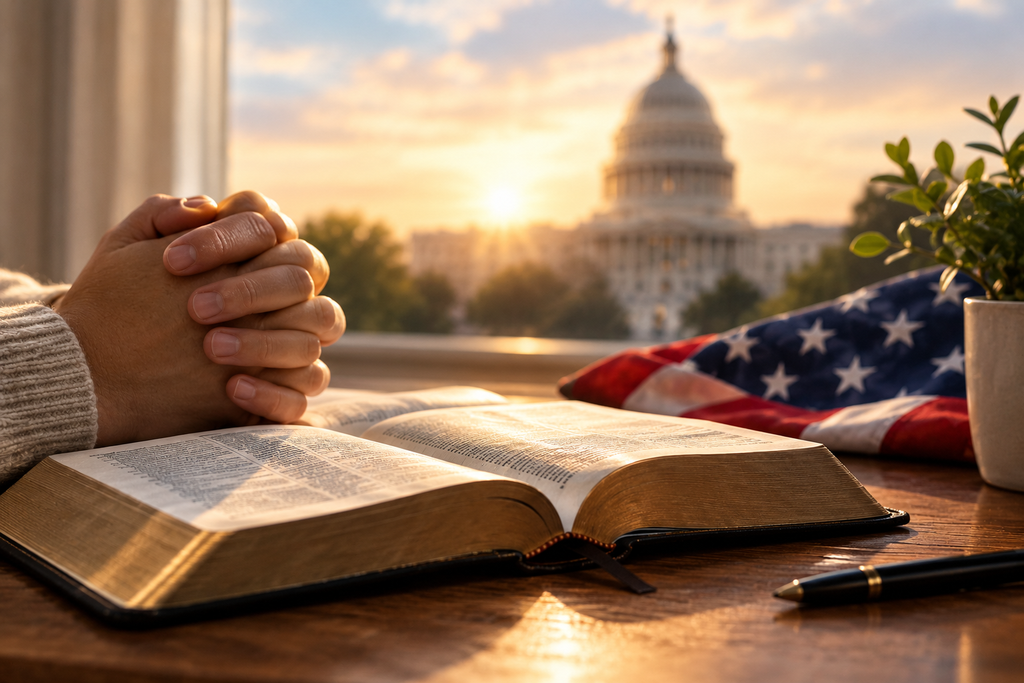

Think like one who can reason within the context he lives in—“Come now, and let us reason together, saith the LORD…”—and, as I said before, with the generations to come in mind.
More importantly than anything else, pray for God’s mercies to be upon us as we consider the future of our nation, our families, and the generations who will come after us.
Godspeed!
Ben Mitchell
Team Manager & Chief Compliance Officer
TRADEway
Watch: Steal a Vote to Steal a Legacy
Speaking of the vote, how does protecting the vote—including the debate surrounding voter ID laws on a national scale—affect your family legacy?