Leveraging the Power of a Family Business

I believe the Bible and business go hand in hand. I’m very big on the family business and how it can work practically, and Biblically, on a very high level.


If you don’t know me, my name is David Mitchell and I’m the founder and CEO of TRADEway. I’m also the senior pastor of 
Park Meadows Church, and involved in several other businesses.  I have 5 grown kids, and 13 grandkids (so far). 

The Old System and the New System

I believe a family business is the best way to create a legacy that lasts for generations. If you go to the beginning of our nation, most people were part of a family business. A lot of these businesses were agricultural–they would work on the farm together each day. Or if they owned a store, they would teach the kids the skill set of how to run that store.

I talk to people around the country about what I call “the old system and the new system.” It usually makes people a bit angry when they hear this and they start thinking about it.

In the new system, you take your kid, who you love more than anything, and you send them off to college to learn something no one in the family has ever done. They’re taught by someone who doesn’t love them. They go work for someone who hates them. (The reason they hate them is that if they’re very smart, your kid will take their job. So they’re not going to teach them the skills–at least not all of them–because your child is their competition). At this point, your child is trading their infinitely valuable time for a little bit of someone else’s money, and every single generation starts over in this endless cycle. That’s what I call “the new system.”

“The old system” is your child taking part in your family business and learning the skill sets passed down from previous generations. I was fortunate to grow up with the old system. I am a fourth generation family businessman, and my grandkids are now the 6th generation.  Let me explain a bit more how “the old system” works by telling my story…

My Family Business Story

Pictured from left to right: My great-grandfather, C.L. Brown; my grandfather, E.G. Hall; my father, Fred Mitchell with me on his shoulders; and me giving a talk in Hawaii.

My great grandfather C.L. Brown got into the oil business in Texas many years ago. It took him his whole life working in an oil field to save up enough money to buy that oil field. He had to borrow about 80% of the money from a bank to buy it. The very next year, he had made enough money to pay the bank off in full. It was the largest oil field in the world just a few years before he bought it. Then he bought some oil fields in east Texas and west Texas. Since he had spent his life working in the oil fields, he knew everything from top to bottom about how an oil field works.

He taught all of that to his favorite daughter and her husband, Elvis Hall, or E.G. Hall as he was known. Elvis was actually the first guy in the family to have a college degree. So Elvis was taught all of these skill sets and the company kept growing.

At that point my grandfather had a problem. He had a lot of money laying around and he didn’t know what to do with it (bad problem huh?). So he decided to learn how to be a stock and bond trader. I remember sitting on his knee when I was little, listening to him talk to brokers. Back then, you had to call your broker on the phone and say, “I need you to buy 500 shares of such and such stock.” The broker would try to tell him, “Mr. Hall, these are three great stocks that just came down the pike, and you need to buy some of these.” And he’d wait a second or two and start cussing at him (real oilmen cuss worse than a sailor, not that I condone that) and he’d say, “I already have my list. I want you to buy this many shares of this, this many shares of that, and this many shares of that.” At eight years old, I learned that you don’t let your broker or your financial advisor tell you what to buy. It’s important that you learn to make your own list.

All of those skill sets were then taught to my dad and my mom. And they taught them to me, and I taught them to my five grown kids, and now we’re teaching them to my 13 grandbabies.

The Power of Compounding Skill Sets in Family Businesses

Here’s what happens in a multi-generational family business: In every generation–not only are you passing down the skill sets of my great grandfather, the oil man, but you’re also passing down the skill sets of my grandfather, who mastered stocks.

Now you’ve got my great grandfather, grandfather, my dad–and now I’ve got the benefit of all of those skill sets. And I’ve learned a few more things and taught them to my kids. And not only that–any ideas your child has, the family finances it. You don’t have to go to the bank and pay the bank interest. So now you’ve got generational wealth.

So which system do you like better–the new system or the old system? In the new system, your family has to start over every generation. I’ve never seen real wealth created that way. It doesn’t give you enough momentum.

Today, my daughter, Katie Huber, is the C.O.O. of TRADEway, and she runs all of it with her husband, Dave Huber. I don’t make any decisions without talking to the two of them. Although lately it’s kind of the other way around! They’re making all of the decisions and sometimes they talk to me. But I kind of like it that way because I have 13 grandbabies. I don’t need to be at the office all the time these days, and I prefer that.

Pictured above: My son, Ben Mitchell.

Why We Started TRADEway

You might ask, if we already had the successful family oil business–where we’re set for life, and our kids are set for life–why go and start another business by starting TRADEway? After all, for many people, the objective of work is getting to a place where one day you don’t have to do it anymore. Hadn’t we already reached that point?

It was because my wife Charlotte and I got to thinking–what if our children don’t like the oil business? What if we could create a new business that has enough divisions where if our children had an idea that’s their own, we could bring it in and make it a division, finance it and it becomes part of the business? So that’s what we did with TRADEway. We thought if we did that, then maybe one or two out of our five kids would work with us and our grandbabies would be near. What ended up happening was that all five of them wanted to.

Ben Mitchell, my son, wanted to start something with precious metals. He’s a great stock trader, by the way. So we started a precious metals division of TRADEway. He built the whole thing, and he did that when he was 20. Yes, I said 20!

So it worked. And you have to think the Lord kind of put that in our minds. He also put it in the Bible. Because, as my friend Dr. Myron Golden says, “The kingdom of God is a family business.” I’ve used Abraham, Isaac and Jacob as my model. It wasn’t that I was thinking, ‘Well, let’s build this thing where we have generational wealth.’ I wasn’t thinking about that. I was thinking that I wanted to work with my kids and see my grandbabies. 

Want to hear more of my origin story from businessman, to preacher, to founder and CEO of TRADEway? Listen to this interview I did with my dear friend Dr. Myron Golden, “Leveraging the Legacy of Family Business.”

Are you ready to get started with your stock trading journey? Book a complimentary strategy session today! We’ll talk you through your goals for learning more about stock trading, and the best ways to get started. 

Blessings,

David Mitchell

How Do You Protect Your 401k Before a Market Crash?

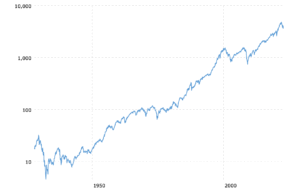
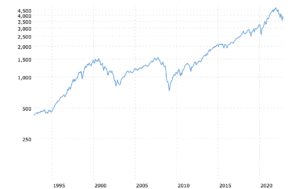
It’s true that if you buy and hold in the S&P or other comprehensive stock indexes, you’ll see an average increase of 6% per year. In fact, if you look at a graph of the S&P since its founding, you’ll see how consistent its rise really is.

But when you zoom out to look at what the stock market is doing year to year, there’s a lot more drama going on. And you’ll notice there have been some pretty severe crashes in recent decades.

When crashes such as the 2008 crash happen, is there really nothing you can do? Do you need to buy and hold with your head buried in the sand hoping and praying it will all turn out ok?

If you want to protect your 401k before a market crash, you have to be prepared in advance and you need to be able to take action quickly.  What do I mean by that? I mean have the conversation now about your options for your long-term money during a crash–before we’re actually in one.

To do this, reach out to your benefits administrator and ask them how they handle major downturns and what, if any, your options are for preventing the loss of money unnecessarily. You may have some more options than you know.

That way, when a crash actually occurs, you (and your benefits administrator) will have a plan. You could think of it like having an emergency kit at home. The best time to get it all set up and stocked with rations, blankets, fresh water and a flashlight is before an earthquake occurs, not after!

No two 401k programs are alike. Each company works with a benefits administrator and chooses which funds are available as investment options. These options are usually very, very limited. Most 401k administrators have a plethora of options for during a bull market (when the market is trending up). But in a bear market (when the market is trending down), some 401ks have limited options.

Taking your account to cash means you’re getting out of the market altogether by selling all your positions at once. You’ll still keep your money in your brokerage account when you do this, you just won’t have any of your money in the market for the time being, because all of your positions will be sold.

To see if your 401k program has the ability to take your account to cash, take a look to see if you have access to a “money market” or “cash” account as an option in your program.

Here at TRADEway we think like traders.

Since the market moves in cycles every few years, we imagine how different your account could look if you stepped on the sidelines during a downturn.

Some advisors may call this timing the market. I disagree. I would simply say I want to apply technical trading analysis to my investment philosophy.

If your 401k does offer a money market account, you can move your money in and out of that account while the market is volatile or in a downtrend, and still make some interest.

When should you make this switch from active positions to your money market account? Good question!

Our team at TRADEway works hard to help you make the tough decisions with technical and news analysis for the market. In our AMPT program (Assisted Managed Portfolios by TRADEway) we help preserve long-term assets by using strategies that take advantage of bull markets (when the market’s going up) and are more conservative and protective during bear markets (when the market’s going down).  We want to protect your money from the crashes and major downturns.

Want to learn more about how a strategy like this could help you better preserve your long-term money? Book a call with our AMPT team to learn more about our program. 


How Much Do You Need to Comfortably Retire?

Well, isn’t that a good question!  How much do you need to comfortably retire? This is a question for which people have been trying to come up with a simple answer for decades. Many think the answer is one million dollars. Others say more. Unfortunately, there is no easy answer. There is no exact figure one can come up with to “know” they will be able to comfortably retire. The reason for this is that there are so many unknown variables in the future.

The biggest unknown variable is that we simply do not know how long we will live. According to the CDC, the average life expectancy for a male in the United States is 73 years, while the average life expectancy for a female is 79 years. However, if you are healthy, it is not difficult to live well into your 80s or even later. One could narrow it down by looking at family history, but you would still not be able to come up with an exact age.

There are plenty of other unknowns as well, for example, which future laws will change regarding finances. Will taxes increase and if so, how much? Will Social Security still be around when you retire? Other things which need to be considered are what you plan to do in retirement. Do you plan to travel? Will your retired life look simple and modest or will you want to splurge and enjoy some of the finer things in life you did not have time to enjoy when you were working? And then again there are the unknowns about future life circumstances. What will your medical bills be as you grow older? What curveballs will life throw at you that will end up being costly? As you can see there simply is no possible way to determine an exact figure of what your expenses will be in retirement.

Therefore, I think we need to shift our focus and start asking some different questions.  First, I think we need to take a close look at retirement…

The traditional form of retirement of working until you are 65, quitting your job, and discontinuing being productive is actually a fairly new concept, and not a good one either.  Many studies have shown that this harsh transition from working full time to lounging full time actually decreases your life expectancy dramatically. I would also argue this is not what God wants you to do with the last years of your life. All throughout the Bible you can read stories of people following God’s will into their old age and they are always working on the mission God has given them. Obviously, this mission changes as their life progresses. The work they would complete in their old age would be appropriate taking into consideration the limitations that come with aging. They would not quit work and sit around using their time only for self-interests.

Even though we may “retire” and leave our career, we should continue the work God has given us to do. There is much work outside of our job or career that God calls us to do. For some of us that might be teaching Sunday School, or serving in a homeless shelter, or coordinating missions teams for overseas trips. For some it may simply be helping to take care of the grandkids or mentoring younger folks through their life challenges. My wife’s grandmother is still alive at the age of 101 and she is still faithfully fulfilling the task that God has currently laid on her heart. She is a prayer warrior who fervently intercedes in prayer on behalf of all her kids, grandkids, and great grandkids. She is old and frail but she continues to be used by God in mighty ways on a daily basis.

Now, the fact that we continue to work and serve God in the new ways He has laid out for us does not mean we cannot take advantage of some of the extra discretionary time available in retirement. Maybe you have always wanted to do some traveling. I personally love to travel and see as much of God’s beautiful creation as I possibly can. Perhaps, your hobby is carpentry and in retirement you would like to devote more time to this hobby and maybe even use it to bless God’s children. Maybe you love gardening and experience great enjoyment in caring for your plants which God has also created. Your answer could also be a combination of several of these potentials and more. We are all uniquely created.

Retirement will look different for everyone and will probably change as we grow older. The question we should be asking ourselves in retirement is ”How does God want to use me?” In fact, this is the question we should all be asking whether we are retired or not. You may even find that God doesn’t want you to stay at your job grinding it out until you are 65. Maybe He has different plans for you which will take you on a more fruitful path before you hit “retirement age.”

The question posed in this article is “How much do you need to comfortably retire?” We have now discussed a bit what “retire” could mean and what it shouldn’t mean.  Let’s discuss the word “comfortably.” This really is the operative word in the question. How do we define what comfortable retirement is? We could talk about what kind of house you will live in, how much traveling you will do, what kind of cars you will drive, etc. I would argue that we need to look to

God for this answer. If we closely examine God’s Word and seek God’s mission for us in retirement we will quickly see that God doesn’t as much call us to a comfortable retirement as He is calling us to a fruitful retirement. So, the real question should be “How do we continue to be fruitful in retirement?” The answer to this of course will vary person to person based on their giftings, resources, health, personalities, and more.

Our mission at TRADEway is to help Christian families have more resources to use to further God’s Kingdom. As you know we teach trading in the stock market.  One of the beautiful things about this type of business is that you can easily continue trading when you retire. Just because you leave your job or your career does not mean you need to quit trading too.

Having developed trading skills has the potential to substantially reduce the amount of money needed to retire. You simply need a smaller lump sum of money if you continue to bring in an income. Imagine how incredible it would be if your funds did not dwindle or decrease in retirement but instead continued to increase as you got older! This is one of our missions at TRADEway.

TRADEway’s AMPT Program aims to help ease the burden of managing your long-term retirement funds. Too many financial advisors are content with leaving your money in the market with a buy and hold mindset. “Hopefully” there will be enough to comfortably retire whenever you hit retirement age. In the AMPT Program we are not seeking to be merely content. We are also not banking on hope. We look to actively manage funds, using the knowledge and skills of a trader, and the wisdom God has given us to position you to carry out the purpose God has for you now and in retirement.

Now, I hope you have realized by now that I am not trying to avoid the initial question, but instead give you a framework of questions you need to ask yourself and prayers you need to ask God so you can make a wise and informed projection for your finances. You will need to estimate at what age you might leave your employment. You will need to consider how long you might live. You will need to have an idea of what life will look like for you when you are retired and roughly what your expenses would be. Will you have any income at all to help counter the expenses? Again, more questions which will take some contemplation and prayer.

As you can see, the question posed at the beginning is really a myriad of questions. Everyone’s answer will be different. Once you have wrestled and prayed through all of these questions you will better be able to answer the first question. How much do YOU need to comfortably retire?


To learn more about TRADEway’s long-term investment program–AMPT–book a call with one of our incredible reps 
here.

–David Verbruggen

Speaker, Consultant, Director of Charts & Coach

What Types of Retirement Accounts Exist & How Do You Know Which One is Right for You?

With so many different types of retirement accounts, how do you know which one is right for you? It may be easier than you think to decide what the best option is.

Employee Sponsored Retirement Accounts

First of all, if you work for an employer that provides retirement benefits in an employee sponsored retirement account, then the decision has already been made for you.

Depending on where you work, such as a for-profit company, a non-profit company, or the government, you may have a 401K, 403B or Thrift Savings Plan (TSP).

Often these employers will match your contributions up to a certain percentage, say 3-5%.

But what about those that are either self-employed or work for a company that doesn’t have

retirement benefits?

Traditional IRAs and Roth IRAs

The two main types of self-directed retirement accounts are the Traditional Individual Retirement Account (Trad IRA) and the Roth Individual Retirement Account (Roth IRA).

The main difference between these two is WHEN you pay taxes on the money contributed and distributed/withdrawn. Money contributed to a Traditional IRA is considered pre-tax and would count as a deduction on your earned income for that tax year. This means that when you take distributions (remove the money), you will pay taxes upon distribution. In other words, the money invested is tax deferred until you take distributions.


The Roth IRA is different because you pay taxes on the income that is contributed to the account. The money contributed and any gains are tax-free in retirement. For a great comparison chart see 
this article at Investopedia. There are income limits with the Roth IRA, which adjusts most years, you can review that in the article listed as well.

Generally speaking, both types of retirement accounts have maximum contribution limits for 2022 of $6,000; or $7,000, if age 50 or older. For 2023 these limits are increasing to $6,500; or $7,500, if age 50 or older.

If you have both types of accounts the combined total contributed between the two must not exceed the overall IRA contribution limit for that tax year. An example of this would be that someone under 50 could contribute $3,000 to a Trad IRA and another $3,000 to a Roth for the tax year 2022 for a total of $6,000 max between the two types of accounts.

How Would You Decide Between a Traditional IRA and a Roth IRA?

You should consider asking yourself this important question: Will I pay more in my taxes on my earnings now than when I retire?

You may have more tax credits or deductions now compared to when you are retired and taking distributions from your Trad IRA, so you may end up paying more in taxes once retired, especially if you are still working and also have to start taking distributions.

Whereas, if you contribute to a Roth IRA now, you will pay taxes on those earnings now and be able to withdraw them tax free upon retirement.

We recommend speaking with a Tax Attorney or CPA to discuss eligibility for retirement

accounts because if you also work for an employer that provides retirement benefits, there are limits on how much you can contribute to self-directed IRAs. They could also possibly discuss what your tax situation would look like upon retirement to help you decide which type of self-directed account best suits your personal financial needs.


Either way you go though, saving for retirement is important, so start saving as early in your life as you can and if you haven’t started yet, there is no time like the present! Get an IRA account opened and start contributing, even just $50 a month if you can!  Be consistent! 

At TRADEway, we’re here to help with your short-term trading or long-term investment needs–we have programs available which can educate and support you through whatever path you decide to take.  Want to be more active in your investments?  Want to take a more passive approach?  Either way, we have something that could help your family.  Reach out TODAY!

We Turn Christian Families into Active Traders Who Build Lasting Legacies

The stock market can be a pretty scary place for those who don’t understand it. We look at the market and we see it going into a recession, and we go “Why would I ever put my money there?!”

But to the seasoned trader, the market always represents opportunity. Whether the market is going up or going down there is always a way to make money.

You might be thinking, “A way to make money in the Market when it’s going down?” Yes, that’s possible. In fact, in a bear market recession, wealth is never destroyed–it only changes hands.

And with the right understanding you could have the skill set to be on the receiving end of that exchange.


The problem is, most people look at the stock market and they think: finance, math, gambling. They believe they have to have some fancy degree or they have to be a genius with math. They think, 
“Maybe people in the stock market have to have a ton of money to risk, or they just have to be incredibly lucky to have success in the stock market.” And that’s simply just not true.

What most people don’t know is that the stock market was built on principles found in Scripture that many can know and understand–you just have to know where to look. And here at TRADEway we can teach you how to find the Scriptures that will guide you through your investing journey.

We’ll look at things like:

  • The Law of Supply and Demand with Joseph and the grain
  • The Law of Risk-Return in Matthew Chapter 25
  • The Law of Advancement found in Psalm 23. (Most people don’t even know what that is, but it’s one of the most important business principles you will ever learn.)

There are principles found in Ecclesiastes about diversification and controlling your emotions in business. And throughout all of Solomon’s books you can find important investment clues to help you know how to trade in the stock market.

Another thing that a lot of people don’t know is that the secret to generating passive income is creating systems of leverage that do the work for you.

See, investing is not just another thing for you to start. It’s not another job for you to hold down. It’s not another business for you to run.

It’s what your money does for you while you do what God called you to do.

Maybe he called you to set up some passive and active incomes in starting a new business. Maybe he called you to spend more time with your family. Maybe you’re called to do ministry work, but you just need more time and more funding to do it.

Putting your money to work (so that you don’t have to) gives you the freedom to do what God wants you to do. Whatever it is that God has called you to do in this season of your life, your money should be doing something too.

So at TRADEway, we help you set up systems of leverage with your money so that you can put it to work. In our TRADEway educational packages you’ll learn how to find great investments, you’ll learn how to pick the right buy and sell opportunities, and you’ll learn the best way to sync your trades with the overall market (plus much more).

You don’t have to do it alone! We’ve got tools to help you with all the math and finance parts if you’re not a math whiz. But if you love the math, we’ll teach you how to do that too. We’re gonna help you through the learning curve by giving you mentors to walk you through the learning process. We’ll show you how to set up a trade, we’ll show you how to protect a trade, we’ll show you how to manage the risk within a trade, and then we’ll show you how to automate it all so that you don’t have to be in front of a computer all day long to trade stocks for you and your family.

We can help you put your money to work.

And if you’re just looking to protect your current assets from a recession or currency crisis, we have scripturally-based portfolios designed to protect you in a recession or bear market crash.

With 24/7 access to your online course materials, quizzes, workshops, live trading hours, and online study groups, there is always something new for you to learn.

And you don’t have to be alone in getting set up. You’ll have access to a diverse community of active online traders, and a knowledgeable coaching staff that’s here to help you. You can reach us on the phone, you can reach us through email, or even through our own online community of coaches and students…there is always a way for you to get in touch with the people who want to help you get where you want to be.

So become a part of the TRADEway family, and we will see you in the market!

Working In God’s Family Business

When you follow the model God created, your family business can become successful, and the fulfillment you receive is like nothing else in life.

There is no greater joy in physical life than to work with your grown children. A culture of teamwork and togetherness is created. Grandparents can spend more time with their grandchildren, because they have established a business, then duplicated skillsets and delegated responsibilities. Guess where the pattern came from: God. Jesus came to Earth to do his father’s work. God provides numerous examples of the family business model in the Bible. Examine these three verses that reflect how Jesus followed God’s family business principles.

“Then said I, Lo, I come (in the volume of the book it is written of me,) to do thy will, O God.” Hebrews 10:7
The Old Testament gives a clear picture of God’s plan for the world. Jesus came to fulfill that will. He was sent to Earth as an act of obedience. He came to do the work of God. Likewise, older generations develop a family business, and each generation takes part in that work to accomplish goals.
“And he said unto them, How is it that ye sought me? wist ye not that I must be about my Father’s business?” Luke 2:49
Jesus had a desire to grow, learn and follow God. From a young age, He was dedicated to the business of his Father. As our children grow, they can use the model Jesus set forth. They can invest time and energy into growing in wisdom regarding a family business. When children see the value of the work their parents are doing, they can grow their own skill sets and talents with the intent to create an even more successful business.
“For I have not spoken of myself; but the Father which sent me, he gave me a commandment, what I should say, and what I should speak.” John 12:49
As we teach our children the family business, we should instill in them the importance of following business principles from the Bible. When they understand the ways a family business blesses all involved, the integrity and success of the business will be strengthened. They can learn to run the business in a way that leads to growth and fulfillment of God’s will.
The family business model is successful because God created that design. At TRADEway we teach you family business principles from the Bible. We show you how to establish and grow a family business. When you follow the model God created, your family business can become successful, and the fulfillment you receive is like nothing else in life.

Why I Don’t Trade During the Holidays

We have a lot of things we could worry about if we wanted to focus on those things, but you know what I like to focus on? Who is in control. God is sovereign.

I don’t like to trade during the holidays. So just from a little bit before Thanksgiving, all the way through Thanksgiving, all the way through Christmas until I don’t know, the first week in January, I’m not in the market normally. And there’s some exceptions to that, but normally that’s what I do, I just don’t like to trade. Now, there’s some reasons for that. First of all, the big players actually are human beings and they go home for vacations around Thanksgiving and Christmas and so the volume is a lot lower on Wall Street and stocks can tend to just kind of go flat. Not much happening. Not nearly as much news either. Of course that’s what drives the market so it gets quieter.

Now the other thing is, it’s also safer not to trade when volume is low. The reason for that is because the big boys are gone and you’ve got less volume, so the retail traders, the ones that don’t know what they’re doing, sometimes they’re jumping around buying things they shouldn’t be buying. It’s just not a good environment for trading. But the main reason I don’t like to trade is because I like to spend time with my family. Now, listen, why create time freedom if you’re not going to take the freed up time and use it to know the Lord better, spend more time with the Lord and more time in the Scripture, spend more time with your kids, if you have grandkids more time with your grandkids, and your spouse? That’s what the time freedom’s for. I like to use this time for family.
Now here’s a great thing to do also during time off during the holidays: you could do a lot of paper trade charting. Why is that important? Because it gets your eye used to seeing these patterns. You get better and better at recognizing patterns as you look at charts.
But what else could we use our time for during the Christmas holidays? Well, what about thinking about what Christmas is all about? One of my favorite passages to look at this time of year is Isaiah, Chapter 9, Verses 6 and 7. It’s a real familiar passage, but I want us to take a closer look at it. It says, “For unto us a child is born, unto us a son is given: and the government shall be upon his shoulder: and his name shall be called Wonderful, Counsellor, The mighty God, The everlasting Father, The Prince of Peace. Of the increase of his government and peace there shall be no end, upon the throne of David, and upon his kingdom, to order it, and to establish it with judgment and with justice from henceforth even for ever. The zeal of the Lord of hosts will perform this.”
When you think about the Christmas season, we need to think about who Jesus Christ is. He is not only the virgin born Son of God, all of the fullness of the Godhead bodily, but He is Wonderful, He is our Counselor. You know, when we look around, we think about things, I don’t know what side you stood on during the election, I know this, half the country is thrilled to death right now, half the country is depressed right now. It would have been that way no matter who won, right? At the time of this writing, our country is divided and we’ve got the COVID pandemic still going on, in fact, heating up a little bit worldwide it seems like. But at the same time, we’ve got the hope of at least three vaccines mentioned already. And that all affects the stock market too, doesn’t it? Yeah, the market’s been up because of that, even in the midst of COVID.
We have a lot of things we could worry about if we wanted to focus on those things, but you know what I like to focus on? Who is in control. God is sovereign. He’s in control over everything. I hope you and your family have a very Merry Christmas and spend a lot of that free time you have thinking about what and WHO Christmas is all about, Jesus Christ.

How Do I Prepare My Family for Wealth?

Statistics have shown that an estimated 70 percent of lottery winners end up going bankrupt within the first 3 – 5 years. Many people think they would not encounter the same issues if they were to become wealthy. At TRADEway, we don’t support the idea of gambling, but we do support our students in learning how to build wealth. Often times our students want to know how they can prepare themselves and their families for becoming wealthy. There are four main principles that are important to learn before building wealth:

Wealth is a privilege, not a right

Wealth is not something that everyone has a right to. People have the right to pursue it. They have the right to go out and try to gain wealth, but they don’t just receive wealth as a right for existing. Because wealth is something people must earn, we should be thankful when we receive that blessing. Deuteronomy tells us that we shall remember our Lord, because it is He that gives us the ability to create wealth. Therefore, anytime we’re creating wealth, we should be thinking of Christ.

Wealth has the power to magnify. 

If you are a generous person, you have the ability to be more generous when you have wealth, therefore it will amplify the things that are in your heart. Likewise, if you are a greedy person, your greed will be magnified when you have more with which to be greedy. It is important to understand that money doesn’t “corrupt” people, it compounds what is already in their hearts. That is why it is important to keep your mind and heart focused on the things of God.

Wealth is fleeting. 

Wealth is not always permanent. We see this in the stories of many people in the Bible: Joseph, who had to store up for seven years in order to be prepared for seven years of famine; Job, whose wealth was taken from him, but the Lord brought it back. It comes in seasons; there is an ebb and flow to wealth. We should strive to use our money wisely while we are able.

There is a purpose for wealth. 

Money is meant to be used as a means to provide for our family. The Bible tells us that if we have not provided for our family, we have denied the faith and we are worse than an infidel. God takes that very seriously. The Bible also says we are supposed to be risk-takers with our money. That means we should use our money to make more money. As we create a profit, we should then use our money to be joyful givers. We should give it to those who are less fortunate. Another way many people do not realize that money should be used is for fun. Those who are wealthy and using money the way God intended should also enjoy the blessings they have been given.

When you build wealth the proper way and manage it according to Biblical principles, you have the ability to make a lasting impact on your own life and the lives of others.

How do the wealthy view money?

There is a difference between the way you think about money and the way the wealthy think about money. If you want to change your financial situation, you need to change the way you think about finances.

How do you think about money? Do you work hard for money, then use it to buy things you want at the current time? What happens when that money is gone? You have to continue working. When you do this, your are trading your time to get those resources. There is a better way to increase your wealth.
People who understand how wealth is built see money, not as a disposable resource to be spent however they want, but as a tool to make more money.
Use your resources in ways that replenish and increase those resources instead of just depleting them.
The money you have can potentially create more money if you use it the right way. To do this, you must learn a skill set. At TRADEway, students learn how to use their resources to possibly build generational wealth. If you want to build wealth, think like the wealthy do. Do what the wealthy do.

Patterns of Emotions in Stock Trading

Too many times, traders experience a negative pattern of emotions regarding the stock market. This can cause traders to make poor decisions, such as getting into a bad trade or not stopping out when they should. Even if a trade does go well, negative emotions may make a trader reluctant to continue trading.

At TRADEway, we believe in the importance of studying God’s Word. It is important to seek God throughout the trading process. Next time you find yourself dealing with negative emotions while in a trade, meditate on these three verses.

Isaiah 41:10 “Fear thou not; for I am with thee: be not dismayed; for I am thy God: I will strengthen thee; yea, I will help thee; yea, I will uphold thee with the right hand of my righteousness.”
Who doesn’t feel instantly calmer when reminded that God Himself promises to strengthen believers? Ask God to give you peace, then rest in the knowledge that He will guide you throughout the trade. God repeatedly shows us in His word that faithfulness leads to abundance. Turn your fear into faithfulness.
2 Timothy 1:7: “For God hath not given us the spirit of fear; but of power, and of love, and of a sound mind.”
Fear is not of God. It is the enemy attempting to distract you from God’s plan. When you begin to fear a poor outcome, you may make a decision that causes you to actually lose money. Remain focused on the plan you established before getting into a trade, and know that God has the power to calm your fears and give you a sense of rationality.
Romans 8:28: “And we know that all things work together for good to them that love God, to them who are called according to His purpose.”
The main thing that should keep you from falling into a negative pattern of emotions is knowing that God is sovereign. Even when we encounter difficult situations, we know that God is in control, and His plan for us is success. You should trust your education and the rules you have put into place, but more importantly trust that God is in control, regardless of the outcome.
There are numerous verses of scripture that are appropriate for a trader who is dealing with fear or anxiety. Bible reading should be part of your daily routine. Get into God’s Word and watch the transformation that will take place! What verses help keep you focused?